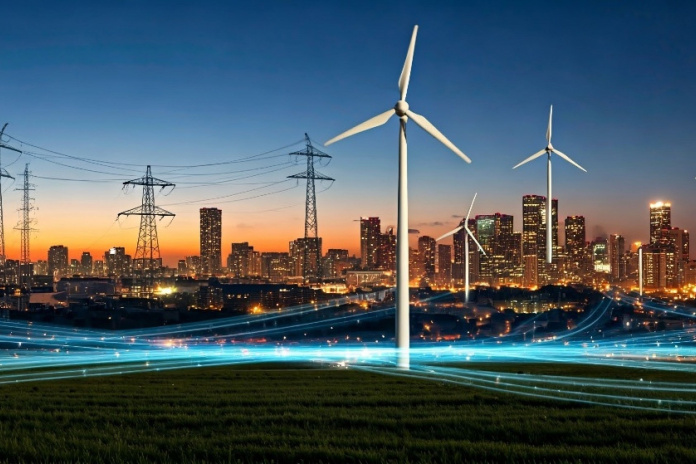

America’s renewable energy boom just hit a moment of truth. Billions in clean power investment are colliding with an aging grid, political uncertainty, and Wall Street nerves — and the outcome will affect electricity bills, jobs, and energy security for years.
Why the Renewable Boom Just Hit a Wall
For years, renewable energy felt like the easy part of the climate transition. Solar got cheaper. Wind farms spread across the plains. Investors poured money into clean power with the confidence that growth was inevitable.
Now, the mood has shifted.
In recent months, renewable energy projects across the U.S. and Europe have been delayed, downsized, or quietly shelved. Power prices are swinging wildly. Utilities are warning about grid stress. And behind the scenes, developers are running into a problem no one likes to talk about: the clean energy buildout is moving faster than the systems designed to support it.
This isn’t a collapse — but it is a reckoning. The question isn’t whether renewable energy will win. It’s whether the grid, regulators, and markets can keep up before costs and frustrations hit consumers.
What Actually Changed — and Why It Matters Now
The warning signs have been stacking up.
In the U.S., grid operators from Texas to New England are reporting record backlogs for new solar and wind projects seeking connection approval. According to industry data, thousands of gigawatts of renewable capacity are stuck waiting in interconnection queues — some for five years or more.
At the same time, utility companies are scaling back clean energy timelines. Rising interest rates have made financing more expensive, while supply-chain costs for transformers, transmission equipment, and skilled labor remain elevated. Several major offshore wind projects on the East Coast have already been renegotiated or canceled outright.
Even Wall Street has cooled. Clean energy stocks, once market darlings, have underperformed broader indexes as investors reassess profitability in a higher-rate world. The Inflation Reduction Act unlocked historic incentives, but money alone can’t fix permitting delays or transmission bottlenecks.
The result: a renewable energy surge running headfirst into infrastructure reality.
Who Pays the Price When the Grid Can’t Keep Up
This bottleneck matters far beyond climate goals.
For consumers, the grid crunch could translate into higher electricity bills — even as renewable power itself remains cheap. When new solar and wind can’t connect, utilities rely longer on older gas and coal plants. That means higher fuel costs, more volatility, and greater exposure to energy shocks.
For businesses, especially data centers and manufacturers, clean power delays are becoming a real operational risk. Many companies have pledged to run on 100% renewable energy, but are discovering that contracts don’t guarantee electrons. Without grid upgrades, green commitments are harder — and more expensive — to honor.
The labor market feels it too. Renewable energy has been one of the fastest-growing job sectors in the U.S., but project uncertainty threatens hiring momentum. Construction crews, electricians, and engineers can’t work on projects that never break ground.
And for energy security, the stakes are even higher. Renewable power isn’t just about emissions — it’s about resilience. A more distributed, diversified energy system reduces dependence on fuel imports and price spikes. Delays keep countries exposed to the very risks renewables were meant to solve.
Perhaps the most ironic impact is this: clean energy success is now part of the problem. Solar and wind are so cost-competitive that demand has exploded — faster than planners anticipated. The grid wasn’t designed for power flowing from thousands of decentralized sources. Updating it requires coordination, political will, and time.
Time is exactly what markets don’t like.
What Comes Next for Clean Power — and Your Energy Bill
So where does this go?
Most experts agree the renewable transition isn’t reversing — but it is entering a more complicated phase. The easy wins are over. The next decade is about execution.
Governments are starting to respond. Federal regulators are pushing reforms to speed up interconnection approvals. States are revisiting permitting rules for transmission lines, long a political third rail. Utilities are investing in grid-scale batteries to smooth renewable output and relieve congestion.
Technology will help, too. Artificial intelligence is increasingly being used to manage grid flows, predict demand spikes, and reduce waste. Advanced storage, from lithium batteries to emerging long-duration solutions, could turn intermittent renewables into reliable baseload power.
But none of this happens overnight.
Investors are adjusting expectations. Instead of pure growth stories, renewable companies are being judged on balance sheets, execution, and regulatory savvy. The next winners won’t just generate clean power — they’ll know how to navigate bureaucracy and infrastructure constraints.
For policymakers, the message is blunt: climate targets mean nothing without grid investment. Transmission lines aren’t glamorous, but they’re now the most critical piece of the energy transition.
Conclusion
Renewable energy hasn’t failed — it’s grown up.
What we’re seeing now is the friction that comes when ambition meets reality. Cheap solar panels don’t matter if they can’t connect. Climate pledges don’t matter if infrastructure lags. And consumers won’t tolerate higher bills just because the transition got messy.
The coming years will decide whether this moment becomes a slowdown — or a breakthrough. Watch grid reform, transmission spending, and energy storage closely. That’s where the real renewable battle is being fought now.
The clean energy future is still coming. It just turns out the hardest part isn’t generating power — it’s moving it.